Commodity APIs: Developer Support
Commodity APIs: Developer Support
Commodity APIs thrive or fail based on developer support. Clear documentation, responsive help, and practical tools are critical for smooth integration, especially in fast-paced markets like oil, gas, and gold trading. Poor documentation slows 85% of developers, while 70% struggle with authentication due to incomplete guidelines. Strong support can cut integration time by 30% and reduce support requests by 47%.
Here’s what stands out:
- OilpriceAPI simplifies integration with clean JSON responses, detailed docs, and 24/7 support. Ideal for basic needs but limited to four commodities.
- CommodityAPI X offers in-depth resources, migration tools, and a live status monitor, but beginners may find it overwhelming.
- CommodityAPI Y balances detailed docs with visual aids and emphasizes community-driven support, though advanced features can complicate simple tasks.
Quick takeaway: Choose APIs with clear documentation and strong support to save time, reduce errors, and ensure accurate data integration.
Lesson 14D - Mastering API Documentation | Easy Guide for Product Managers
1. OilpriceAPI
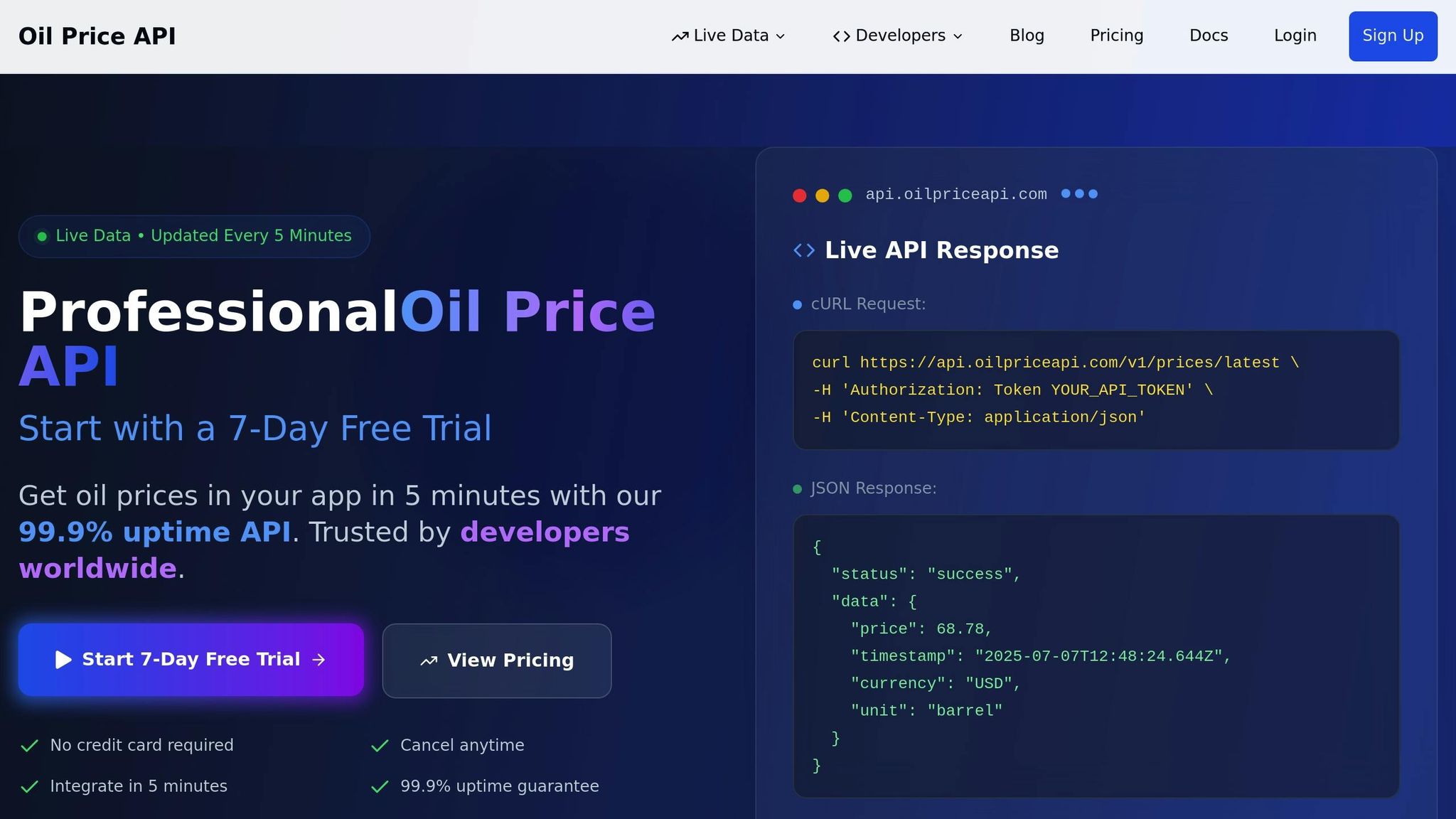
OilpriceAPI focuses on making life easier for developers in the commodity API space. It provides real-time and historical price data for key commodities like Brent Crude, WTI, Natural Gas, and Gold. The data is delivered through a JSON REST API that's designed for straightforward integration.
Documentation Quality
OilpriceAPI’s documentation is thorough and user-friendly, covering everything developers need to integrate the API seamlessly. It includes a quick-start guide with practical code examples, detailed explanations of API endpoints, data formats, and usage notes. There’s even a dedicated section on error handling to simplify troubleshooting. For developers in the U.S., the documentation aligns with familiar standards: prices are displayed as "$80.29", timestamps follow ISO formats, and measurements stick to American conventions. This clarity helps developers hit the ground running.
Developer Resources
To make integration even easier, OilpriceAPI provides SDKs and sample code. For example, here’s a simple cURL command to fetch the latest prices:
curl https://api.oilpriceapi.com/v1/prices/latest \
-H 'Authorization: Token YOUR_API_TOKEN' \
-H 'Content-Type: application/json'
The API responds with clean, predictable JSON:
{
  "status": "success",
  "data": {
    "price": 80.29,
    "formatted": "$80.29",
    "currency": "USD",
    "code": "BRENT_CRUDE_USD",
    "type": "spot_price",
    "created_at": "2024-01-17T20:14:05.698Z"
  }
}
Beyond code examples, OilpriceAPI also runs a developer blog packed with tips and best practices to help optimize API usage.
Support Channels
OilpriceAPI ensures developers have access to help whenever they need it, offering 24/7 multi-channel support. There are tiered support plans available: the Production Boost plan at $45/month and the Exploration plan at $15/month. Both plans include priority support to resolve critical issues quickly. For common questions, the FAQ section provides a handy self-service option.
Community Engagement
The platform actively engages with its user base through social media, offering real-time oil price alerts, market updates, and energy news. With a 99.9% uptime guarantee and market data refreshed every 5 minutes, OilpriceAPI has built a reputation for reliability and trustworthiness among developers who rely on it for production-grade applications.
2. CommodityAPI X
CommodityAPI X builds on years of API expertise to deliver robust support for developers. With the launch of its major X API v2 upgrade, the platform has shown its dedication to meeting the evolving needs of its users. This upgrade reflects a commitment to making the development process smoother and more efficient, setting it apart from other platforms.
Documentation Quality
CommodityAPI X offers a well-structured documentation system that includes everything developers need: technical overviews, integration guides, and detailed API references for each endpoint.
The documentation goes a step further by providing tutorials, developer tools, and practical use case examples. For those working with older systems, there’s a specialized migration hub designed to simplify the transition to X API v2. This hub breaks down the differences between versions and offers step-by-step guides for migrating specific endpoints. Such detailed resources are crucial for avoiding delays during integration.
The platform strongly encourages developers to adopt X API v2, emphasizing that all future updates and improvements will be built on this version. By doing so, developers can stay ahead of the curve and avoid the complications of outdated technology.
Developer Resources
CommodityAPI X provides both platform-maintained libraries and open-source client libraries, giving developers the freedom to choose the integration method that best suits their needs.
Beyond basic documentation, the resource library includes tools like troubleshooting guides, FAQs, and a live API status monitor. This monitor offers real-time updates on system health, making it easier for developers to identify whether an issue lies with their integration or the platform itself. This level of transparency adds a layer of trust and efficiency to the development process.
Support Channels
The platform uses a tiered support system tailored to different types of issues. The primary support option is a community forum moderated by X employees, where developers can post technical questions and receive input from both staff and experienced users.
For more specific concerns, such as policy-related queries or account issues, dedicated support channels are available. Premium API users benefit from a dedicated billing support channel, which can be accessed directly through the developer portal's billing page.
Community Engagement
CommodityAPI X actively engages with its developer community through social media and forum updates. These channels keep users informed about platform changes and upcoming features.
The community forum is more than a support tool - it’s a space for developers to share knowledge and learn from one another. To maintain high-quality discussions, the platform encourages users to search existing documentation and forum threads before posting new questions.
When submitting questions, developers are guided to include detailed descriptions of their issues, the API calls they’re making, the responses they’ve received, expected outcomes, troubleshooting steps taken, and relevant timeframes or IDs. This structured approach ensures that both moderators and community members can provide accurate, timely assistance.
sbb-itb-a92d0a3
3. CommodityAPI Y
CommodityAPI Y provides a well-rounded experience for both developers and business leaders. Its documentation and resources are crafted to address the needs of technical teams while also being accessible to CTOs and product managers. This dual focus highlights its commitment to balancing technical accuracy with business usability.
Documentation Quality
The API documentation is meticulously structured to guide users through every step of integration. It covers essentials like authentication methods (API keys, OAuth, JWT), endpoint details, parameters, and error handling. Each endpoint is described with specifics such as HTTP methods, URL structures, parameters, and clear request/response formats. Error handling is particularly thorough, including error codes, explanations, sample responses, and troubleshooting tips.
To make complex workflows easier to grasp, the documentation incorporates visual aids like diagrams and flowcharts. Consistent formatting across endpoint descriptions and code examples ensures clarity, while practical code snippets and SDKs enhance usability for developers.
Developer Resources
CommodityAPI Y offers a variety of tools to simplify the integration process. Developers can access detailed code examples, SDK repositories, and interactive testing tools to get started quickly. A step-by-step "getting started" guide walks users through their first API call, making it especially helpful for teams unfamiliar with commodity data APIs.
Key details like rate limits, quotas, and versioning are clearly documented, ensuring developers can manage usage effectively and reference the correct API version. Additionally, support channels and an active community provide further assistance to smooth the integration process.
Support Channels
For support, CommodityAPI Y provides multiple options. Community forums are particularly efficient, with 80% of issues resolved within hours. For more complex problems, users can access direct support from experts, ensuring timely and accurate solutions.
Community Engagement
The CommodityAPI Y community adds another layer of value. Beyond technical support, it fosters networking opportunities, with 67% of participants reporting job connections through Dev Chat. The community also plays a key role in detailed issue reporting, ensuring quick and effective resolutions.
Advantages and Disadvantages
Commodity APIs come with a mix of strengths and challenges that directly impact their integration and usability. By weighing these trade-offs, you can choose the right API for your specific development needs and resources.
| API Platform | Advantages | Disadvantages |
|---|---|---|
| OilpriceAPI | Easy-to-use JSON REST structure; specialized coverage of key commodities like Brent Crude, WTI, Natural Gas, and Gold; flexible subscription plans for different user needs | Limited to just four commodity types |
| CommodityAPI X | Comprehensive documentation and straightforward JSON integration, making it developer-friendly | The extensive documentation can feel overwhelming for beginners |
| CommodityAPI Y | Clear visual documentation and strong community support | Advanced features can add unnecessary complexity for basic use cases |
Beyond these highlights, other factors like documentation quality, support responsiveness, available resources, and integration complexity play a big role in deciding which API to use.
Documentation and Support
Documentation quality varies widely. For instance, OilpriceAPI’s simple JSON REST design makes integration efficient, while CommodityAPI X offers detailed guides that might require some extra effort to grasp. On the support side, responsiveness can be a game-changer.
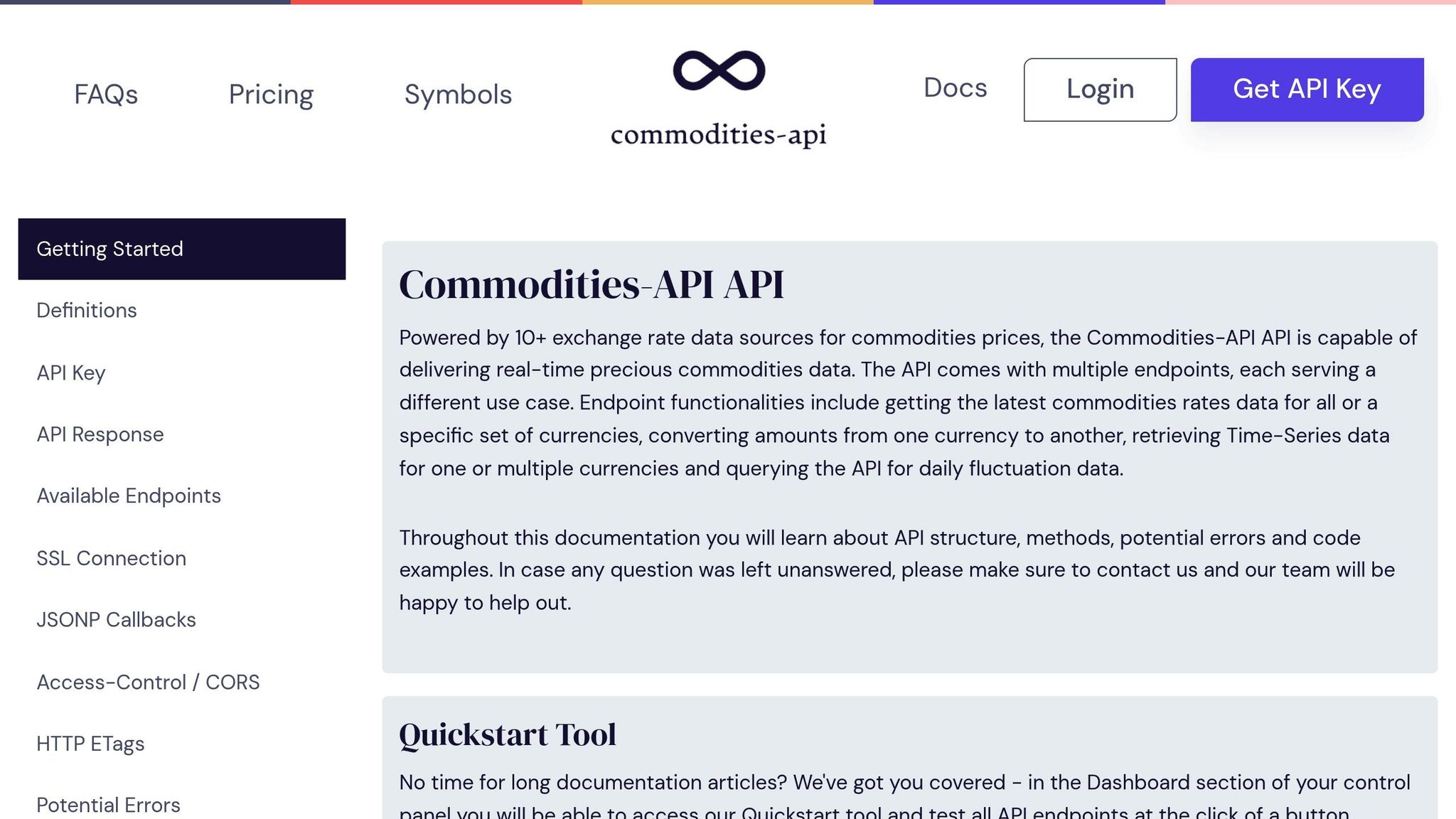
Matthew Peters, a user of Commodities-API, shared his experience in June 2025:
"Support in 2 minutes. I need help on a quick question and the team got back to me and solved the solution in minutes clearly and efficiently. Great experience."
Similarly, Chris appreciated the integration assistance, saying:
"The Commodities API seems accurate and the prices are reasonable, but their support team is incredibly helpful, friendly, and detailed. Martin has been instrumental in helping me integrate their API into my client's website. Thank you!"
Resources and Integration Complexity
The availability of resources, such as SDK libraries and code samples, varies by platform. Some APIs focus on providing extensive tools and active forums that help developers troubleshoot and network, while others prioritize core functionality with minimal extras.
Integration complexity is another key consideration. APIs designed for enterprise use often include advanced features like multiple data formats and robust error handling. While these features can be powerful for large-scale applications, they might overcomplicate things for developers seeking basic commodity price data.
Cost and Scalability
The balance between cost and value depends on your specific needs. APIs with a narrow focus on certain commodities can be a cost-effective choice for targeted applications. On the other hand, platforms with extensive features and scalability options often justify their higher prices by catering to more complex, high-volume operations.
Understanding these trade-offs will help you select an API that aligns with your technical requirements, budget, and project goals.
Conclusion
The previous sections highlighted the importance of documentation, resources, and support channels in ensuring smooth API integration. For U.S.-based developers working with commodity APIs, strong developer support isn't just helpful - it's essential. With 70% of developers planning to increase their API usage and 58% of software engineering leaders stressing the growing importance of developer experience at the executive level, the quality of documentation and support directly influences project outcomes.
Clear and well-structured specifications can trim integration time by 30% and reduce support requests by nearly half (47%). This translates to faster deployment and lower development costs - critical factors for developers and businesses alike. When you weigh the benefits against the challenges, one thing is clear: effective developer support is the backbone of successful API integration.
OilpriceAPI stands out by offering a straightforward design tailored to developers who need quick, accurate access to commodity data. Its simplicity aligns with the preference of 78% of developers for documentation that includes interactive features. This makes it a strong choice for those seeking reliable data without the hassle of overly complex systems.
For developers in the U.S., selecting APIs with up-to-date documentation and responsive support is a smart move. Doing so minimizes onboarding time, reduces integration headaches, and boosts the chances of successful implementation. This is especially important in the fast-moving world of commodity trading, where timely, accurate data and responsive assistance can make all the difference in decision-making during market volatility. As discussed, robust developer support is not just a convenience - it’s a necessity for building effective commodity data applications.
FAQs
How does OilpriceAPI deliver accurate and reliable commodity data for developers?
OilpriceAPI delivers precise and dependable data by pulling information directly from reputable financial sources and major exchanges. Its real-time validation system works around the clock to ensure the data remains accurate and consistent.
The platform boasts an impressive 99.9% uptime, providing developers with seamless access to real-time and historical pricing for commodities like Brent Crude, WTI, Natural Gas, and Gold. This level of reliability simplifies price analysis and empowers you to make well-informed decisions for your projects.
What developer support options does OilpriceAPI provide, and how can users get help anytime?
OilpriceAPI offers comprehensive tools and resources for developers, making it easier to integrate and utilize their API. With detailed documentation, user-friendly SDKs, and various helpful materials, they aim to streamline the development process and save you time.
If you ever run into issues or have questions, their 24/7 support team is always on hand to provide assistance. Whether it’s troubleshooting a technical problem or seeking guidance, you can count on their team to help at any hour.
How does OilpriceAPI’s documentation help developers save time and reduce the need for support?
OilpriceAPI offers straightforward, well-organized documentation that simplifies the integration process for developers. With step-by-step instructions, a user-friendly layout, and practical examples, even those new to APIs can hit the ground running.
The platform provides clear guidance and dependable data access, helping developers sidestep common pitfalls and minimizing the need for extra support. This approach not only saves valuable time but also ensures a hassle-free implementation, enabling users to concentrate on creating their applications with ease and confidence.