Real-time data throughput in APIs determines how quickly data flows between systems, impacting speed, reliability, and business performance. Here's what you need to know:
-
Key Factors Affecting Throughput:
- Network Speed: Bandwidth, latency, and congestion can slow data delivery.
- Server Capacity: Servers must handle demand spikes without bottlenecks.
- Data Size: Smaller, optimized data packages improve processing speed.
-
Common Problems:
- Slow response times during high traffic.
- Infrastructure bottlenecks limiting performance.
- Challenges in scaling to handle surges in API requests.
-
Solutions:
- Use data caching for frequently accessed information.
- Compress and optimize data to reduce package size.
- Implement rate-limiting to prevent overload.
- Add servers and use load balancing for high traffic.
- Position global access points closer to users.
-
Example: OilpriceAPI processes real-time price data with:
- 115ms average response time.
- 99.9% uptime.
- Updates every 5 minutes for market insights.
Efficient API throughput management ensures fast, reliable, and scalable systems, helping businesses make timely decisions and maintain smooth operations.
Top 7 Ways to 10x Your API Performance
What Affects API Throughput
API throughput depends on three main factors: network speed, server capacity, and the size of data packages.
Network Speed Limits
The network plays a big role in how quickly data moves. Here are three key aspects that can slow things down:
- Bandwidth: The maximum amount of data that can flow through the network.
- Latency: The time it takes for data to travel from one point to another.
- Congestion: How heavy usage during peak times can drag down performance.
Once the network is running efficiently, the next step is ensuring the server can handle the load.
Server Load Management
The server's capacity has a direct impact on how well an API can manage multiple requests at once. Allocating resources properly ensures stable performance, even as demand fluctuates.
| Request Volume | Server Capacity Needs |
|---|---|
| 10,000 requests/month | Basic server configuration |
| 50,000 requests/month | Increased processing power |
| 250,000 requests/month | Advanced infrastructure setup |
In addition to server capacity, managing the size of the data being transmitted is critical for smooth operation.
Data Size Control
The size of the data being sent affects how quickly it can be processed and delivered. Larger data packages demand more bandwidth and processing power.
To keep data size manageable, consider these strategies:
- Compress data to reduce the amount being transmitted.
- Optimize responses to remove unnecessary information.
- Use JSON format for lightweight and efficient data handling.
These techniques are especially important for tasks like real-time price updates, where speed is essential to maintaining system performance.
How to Improve API Speed
Setting Up Data Caching
Data caching helps lighten the load on your server by storing frequently accessed data temporarily. This makes retrieving data faster and more efficient.
Here’s how to set up caching effectively:
- Store static data that doesn’t change often.
- Set expiration times based on how frequently the data is updated.
- Use distributed caching systems for larger-scale applications.
- Plan for cache invalidation to ensure the data stays accurate when updates occur.
Reducing Data Package Size
Smaller data packages mean faster transmission and less strain on processing resources. Optimizing the size of your data can make a noticeable difference.
Some practical steps include:
- Use GZIP compression for API responses.
- Remove any unnecessary JSON fields.
- Choose compact data formats for numerical values.
- Trim extra whitespace and formatting that doesn’t add value.
These adjustments help streamline data handling and improve speed.
Managing Request Limits
Request limits protect your system from overload while ensuring smooth performance. A well-designed rate-limiting system balances user access with server capabilities.
| Request Tier | Monthly Limit | Best For |
|---|---|---|
| Exploration | 10,000 | Small apps and testing purposes |
| Production Boost | 50,000 | Medium-sized business operations |
| Reservoir Mastery | 250,000 | Large-scale enterprise-level applications |
When setting limits, consider peak usage times, server capacity, and the needs of different user groups. Also, ensure your system handles cases where limits are exceeded in a user-friendly way.
sbb-itb-a92d0a3
Advanced Performance Methods
Enhancing basic speed improvements, advanced methods ensure your API can handle growing demands without faltering.
Adding Servers and Balancing Load
Using multiple servers with load balancing helps manage increased traffic while keeping performance steady. Load balancers distribute incoming API requests across servers, ensuring consistent response times during high-traffic periods.
| Server Configuration | Benefits | Best For |
|---|---|---|
| Active-Active | Splits traffic evenly, no downtime during updates | High-traffic APIs |
| Active-Passive | Cost-effective backup with automatic failover | Standard workloads |
| Round-Robin | Easy to set up, evenly spreads requests | Predictable traffic patterns |
Expanding these strategies globally can further reduce delays for users.
Leveraging Global Access Points
Positioning servers closer to users through global access points reduces delays. Content Delivery Networks (CDNs) store and serve cached data from locations worldwide, ensuring faster responses no matter where users are.
For real-time data APIs, server placement is especially important. For instance, OilpriceAPI illustrates how global server positioning can enhance performance.
In addition to location strategies, managing simultaneous requests efficiently is crucial for maintaining high performance.
Handling Multiple Requests
Modern APIs must handle multiple requests at the same time without slowing down. Techniques like asynchronous processing, batching requests, and managing queues can boost throughput while maintaining accuracy. These methods help process requests quickly and improve user satisfaction.
To ensure optimal performance, track these key metrics:
| Metric | Target | Impact |
|---|---|---|
| Response Time | < 200ms | Improves user experience |
| Error Rate | < 0.1% | Ensures reliability |
| Request Success | > 99.9% | Maintains stability |
| Concurrent Users | Based on tier | Guides infrastructure needs |
Example: Price Data APIs
This example highlights how efficient data handling supports real-time decision-making in environments with frequent updates and high data demands. It showcases practical solutions for managing these challenges.
OilpriceAPI Data Delivery
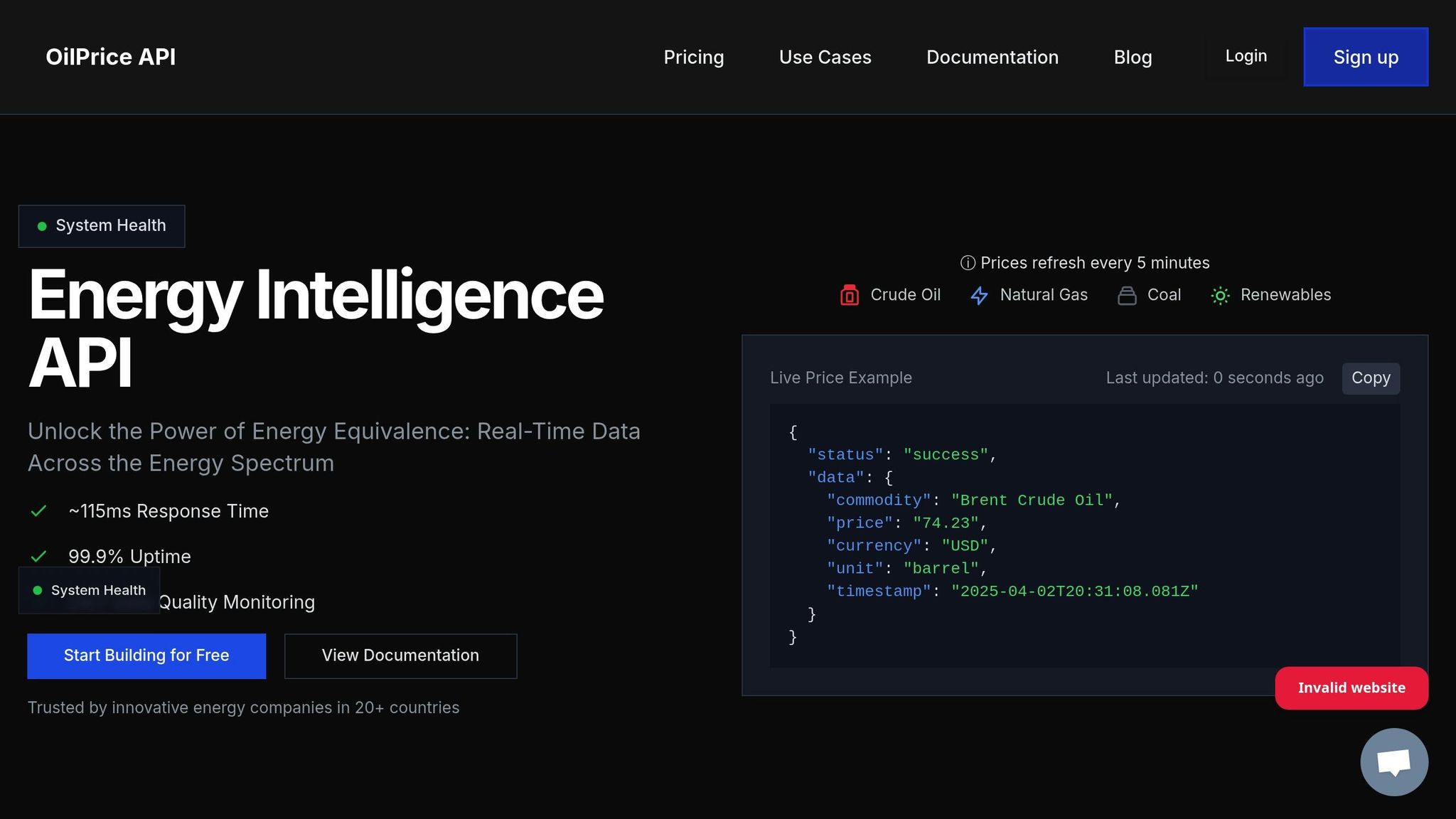
OilpriceAPI demonstrates how to maintain fast response times - averaging 115ms - while delivering continuous updates for key metrics like Brent Crude and WTI.
Here’s a breakdown of their system:
| Feature | Implementation | Performance Impact |
|---|---|---|
| Update Frequency | 5-minute intervals | Balances data freshness and load |
| Response Time | ~115ms average | Low latency for real-time trading |
| System Uptime | 99.9% guaranteed | Reliable access to data |
| Quality Control | 24/7 monitoring | Ensures data accuracy |
"Reliable Data Accurate prices from trusted market sources." - OilPrice API
These optimizations simplify API integration while ensuring dependable performance.
Price API Integration Results
Managing throughput effectively boosts the performance of financial systems.
Key metrics include:
| Metric | Achievement | Business Impact |
|---|---|---|
| Data Freshness | Updates every 5 minutes | Provides timely market insights |
| Service Reliability | 99.9% uptime | Ensures uninterrupted operations |
| Integration Efficiency | REST API with JSON | Simplifies implementation |
| System Scalability | Enterprise-ready | Supports business growth |
With a solid infrastructure and efficient data delivery, financial platforms can handle market shifts smoothly, ensuring they process information quickly while maintaining stability.
Summary
Managing real-time API throughput effectively means striking a balance between high performance and a dependable infrastructure. This approach improves both scalability and response times.
Here are three key areas to focus on:
- Infrastructure Optimization: Using distributed servers and global access points helps maintain steady performance, even during fluctuating traffic.
- Data Management: Keeping package sizes in check and using smart caching ensures fast responses.
- System Monitoring: Regular performance tracking ensures the service remains reliable.
OilpriceAPI's metrics highlight how these strategies can improve technical performance while also delivering strong business results. Here's how optimized throughput management connects technical improvements to business benefits:
| Aspect | Technical Approach | Business Benefit |
|---|---|---|
| Speed | Faster response times | Enables quick market actions |
| Reliability | Round-the-clock monitoring | Ensures consistent operations |
| Scalability | Distributed server infrastructure | Supports business growth |
| Data Quality | Updates every 5 minutes | Aids in precise decision-making |
These measures not only enhance technical capabilities but also contribute to measurable business success.