Ultimate Guide to Cost-Efficient Commodity APIs
Ultimate Guide to Cost-Efficient Commodity APIs
Want to cut costs while accessing accurate commodity price data? Commodity APIs make it easier for businesses to get real-time and historical pricing for materials like crude oil, gold, and natural gas. Instead of paying for expensive data terminals or manual updates, APIs offer a pay-per-use model, saving money and improving efficiency.
Key Takeaways:
- What are Commodity APIs? Tools that provide structured, real-time, and historical commodity price data, often in JSON format.
- Why Cost-Efficiency Matters: Traditional data solutions can cost over $2,000 per user/month. APIs reduce costs by charging based on usage, not user count.
- Common Use Cases: Energy companies, financial firms, manufacturers, and developers use APIs for smarter decisions and streamlined operations.
- Cost-Saving Strategies: Optimize API requests with batch processing, caching, and targeted data retrieval. Monitor usage and set limits to avoid overspending.
Bottom Line: Commodity APIs are an affordable alternative for accessing pricing data, but managing usage is critical to keep costs low.
API Pricing Webinar (Benchmarks, API Pricing Strategy)
Core Features of Cost-Efficient Commodity APIs
A well-integrated system is key to keeping costs under control when working with commodity data. When assessing commodity APIs, look for those that offer smooth integration capabilities. Prioritize APIs that come with detailed documentation, SDKs, and dedicated support services. These tools make implementation easier, cutting down on the need for expensive custom development work.
Strategies for Reducing Costs with Commodity APIs
Managing costs effectively begins with understanding how your organization utilizes commodity APIs. By leveraging core integration features and employing targeted strategies, you can trim expenses without compromising data quality. Here’s how US-based organizations are optimizing their API spending.
Optimizing API Requests
One of the simplest ways to save money is by cutting down on unnecessary API calls. Redundant requests and pulling unneeded data can quickly inflate costs. Start by analyzing your current usage patterns to identify areas where requests can be consolidated.
Batch processing is a game-changer. Instead of making individual API calls for every data point, group multiple requests into a single call. For instance, if you’re retrieving pricing data for several commodities, bundle those requests into one API call rather than handling them separately. This approach can significantly reduce the total number of calls.
Another strategy is implementing caching mechanisms. Frequently accessed data can be stored locally, and new API calls can be limited to when the information becomes outdated. You can optimize caching rules based on how often the data changes. Real-time commodity prices might need updates every few minutes, while historical data can be refreshed less frequently.
Additionally, narrow down the data you request. Many APIs allow you to specify the exact fields you need. Instead of pulling an entire dataset, request only the details you require, such as basic pricing information. This targeted approach reduces bandwidth usage and processing time.
Improving Data Storage and Processing
Efficiently managing data locally is another way to keep API costs under control. Build a strong internal database to store historical data and frequently accessed information. Use this database for calculations like price averages, trends, or percentage changes. This way, you’ll only need fresh API data for the latest prices rather than for every calculation.
Data compression can also help. Compressing stored information reduces storage space and speeds up data transfers, which is especially useful when dealing with large volumes of historical data. This not only lowers storage costs but also improves processing efficiency.
Set up data refresh schedules tailored to your needs. Not all data requires constant updates. For example, historical data might only need monthly updates, while current pricing could be refreshed hourly. Aligning refresh rates with real business requirements prevents unnecessary API calls and keeps costs in check.
Monitoring and Managing Costs
Once you’ve optimized your API usage, active monitoring is essential to maintain cost efficiency. Keep an eye on key metrics like cost per call, total monthly spending, and throughput rates. These insights will help you identify spending trends and fine-tune your usage.
"API management is best described as the process of overseeing all aspects of the APIs that your enterprise utilizes. This includes providing a means of building APIs, making them accessible for users, monitoring and analyzing their usage, reporting performance metrics and securing access." - Copado Team
Deploy API gateways to manage access and control consumption. These tools can authenticate calls, limit data rates, and block unauthorized usage that might drive up costs. You can also set usage limits for specific departments or applications to prevent unexpected surges in API consumption.
Establish clear policies around API usage. Define which applications can access specific data, set quotas for different teams, and require approvals for high-volume requests. These guidelines ensure everyone uses APIs efficiently and responsibly.
Generate detailed usage reports by department, application, or time period. This data helps pinpoint areas driving costs and highlights where optimization efforts will have the most impact. Monitoring trends over time can also reveal inefficiencies or unauthorized access.
Lastly, set up automated alerts for unusual spending patterns. Notifications for when usage exceeds thresholds or costs spike unexpectedly can help you respond quickly and avoid overspending. Regular reviews of your API spending - whether monthly or quarterly - can uncover opportunities to renegotiate pricing, switch to better plans, or eliminate unused services.
sbb-itb-a92d0a3
Case Study: Cost-Efficient Integration with OilpriceAPI
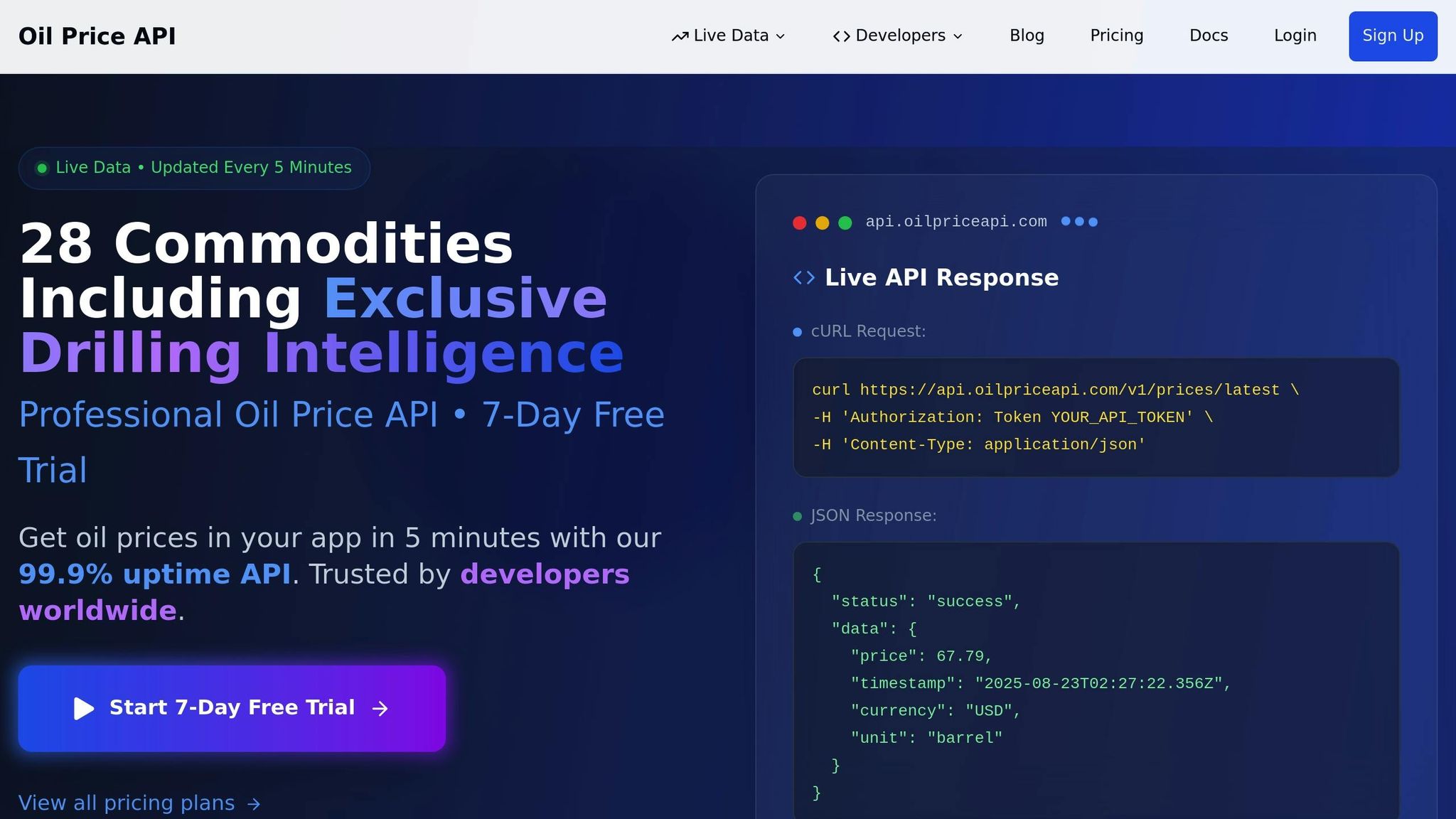
This case study highlights how organizations implement smart, cost-saving commodity data strategies using OilpriceAPI. It builds on earlier cost-saving methods and demonstrates how OilpriceAPI works in real-world scenarios.
Using OilpriceAPI for Real-Time Commodity Pricing
OilpriceAPI’s JSON REST structure makes integration straightforward. It delivers real-time pricing for key commodities, formatted for quick market analysis. This allows businesses to access actionable data without extra processing headaches.
One standout feature is its batch processing capability. Instead of making separate requests for each commodity, OilpriceAPI retrieves multiple prices in a single call. This reduces the number of API calls, simplifies integration, and trims down operational costs.
During volatile market periods, real-time data becomes indispensable. Energy trading firms, for example, rely on OilpriceAPI’s live feeds to track price movements throughout trading hours. Its consistent data format eliminates the need for complex parsing routines, saving time and resources.
Another useful feature is the configurable refresh intervals. Organizations can adjust how often they refresh data, balancing the need for up-to-date information with efficient API usage. This flexibility ensures businesses only use what they need.
Historical Data for Better Decision-Making
Historical pricing data is a game-changer for companies looking to make informed decisions without the burden of maintaining large local databases. OilpriceAPI provides access to past pricing trends, enabling everything from quarterly reporting to long-term forecasting.
With on-demand access to historical data, businesses can perform trend analyses and manage risks more effectively. This approach ensures you’re only paying for the specific data periods you need. For instance, analyzing crude oil price cycles can help identify the best times for contract negotiations - all without the expense of storing years of data on-site.
These historical insights work hand-in-hand with real-time data, empowering organizations to plan strategically while keeping costs in check.
Cost-Efficiency in Practice
OilpriceAPI’s cost-efficient design revolves around features like batch processing, caching, and precise usage monitoring. Its tiered pricing structure ensures flexibility: the Hobby plan is ideal for smaller applications, while Business and Enterprise plans cater to high-volume systems.
Caching strategies can further optimize API usage. Since commodity prices often change gradually, caching responses for short periods during active market hours - or longer during quieter times - reduces API call frequency while maintaining accuracy.
Effective error handling is another critical component. Techniques like exponential backoff help prevent unnecessary duplicate requests during network issues, conserving API call allocations.
To maximize efficiency, development teams can use OilpriceAPI’s various endpoints strategically. Real-time endpoints provide current prices, while bulk historical data endpoints handle larger datasets. This ensures you’re only paying for the specific functionalities your application requires.
Monitoring API usage is straightforward, thanks to clear request counting. This allows teams to track consumption across applications, identify areas to consolidate requests, and refine refresh schedules for better efficiency. Additionally, the lightweight JSON format minimizes bandwidth and processing needs, further contributing to a leaner and more cost-effective data strategy.
Best Practices for Cost-Efficient Commodity API Usage
Main Takeaways
Using commodity APIs efficiently means striking the right balance between your data needs and your budget. This can be achieved through smarter request management, effective caching, and careful monitoring.
One way to optimize requests is by grouping commodity price queries together, especially during busy market hours, to cut down on the number of API calls. For caching, you can use shorter cache durations (30–60 seconds) during peak trading times and extend them during slower periods to reduce unnecessary requests.
Start with a lower-tier subscription plan and scale up as your data requirements grow. For instance, OilpriceAPI’s Hobby plan is ideal for smaller applications or testing, while their Business or Enterprise plans are better suited for high-volume needs.
Error handling is another critical factor. Use exponential backoff for retries during API issues; this approach adds increasing delays between retries, preventing duplicate requests and conserving your API call allocation.
Finally, consider the data format you’re working with. JSON is lightweight and efficient, making it a great choice for minimizing bandwidth usage and processing time, especially when dealing with large datasets or frequent real-time updates.
These strategies provide a solid foundation for building a cost-conscious and scalable API approach.
Planning for Long-Term Efficiency
Beyond day-to-day cost-saving measures, long-term efficiency requires thoughtful planning. Align your API usage with your business’s growth trajectory to keep expenses manageable as your needs expand.
Regularly monitor your API consumption, adjust data refresh rates, and plan for subscription upgrades to ensure scalability without disruptions. OilpriceAPI, for example, offers clear upgrade paths, making it easier to manage costs as your business grows.
When evaluating commodity data APIs, think beyond the subscription price. Consider the total cost of ownership, which includes development time, maintenance, and infrastructure. APIs with detailed documentation and responsive support often save you money in the long run by reducing integration headaches.
Geographic and regulatory factors also play a role. For U.S.-based businesses, choosing an API that aligns with local market hours, uses U.S. currency formatting, and complies with regulations can simplify integration and ensure consistent data presentation.
To protect against service disruptions, build redundancy into your system. Instead of duplicating entire data feeds, focus on critical data points and create a fallback plan to handle outages gracefully.
The commodity data landscape is always changing, with new trading patterns and instruments emerging. Selecting APIs that are actively maintained and updated ensures your data infrastructure stays relevant and efficient as the market evolves.
FAQs
How can businesses choose the right API subscription plan to meet their data needs and usage patterns?
To choose the best API subscription plan, businesses should start by reviewing their current and anticipated data usage. This means looking at how frequently the API will be accessed, the amount of data needed, and any specific features or endpoints required.
Next, consider the type of pricing model that fits your needs: a fixed subscription plan or a usage-based pricing structure. If your API usage is steady, a fixed plan might be the better option. On the other hand, if your usage varies, a usage-based plan could offer more flexibility and savings.
Using API management tools to track usage patterns can provide valuable insights. By combining this data with your business objectives, you can select a plan that balances scalability with cost efficiency.
What are the best practices for using caching to optimize real-time data access while managing costs?
To strike the right balance between accessing real-time data and keeping costs under control, consider using caching with a clearly defined Time to Live (TTL). This approach ensures data stays up-to-date while cutting down on excessive API calls.
Take the time to analyze usage patterns to pinpoint high-demand data that can benefit from caching and eliminate redundant fetches. Preloading commonly accessed endpoints and keeping an eye on cache performance metrics - like hit and miss rates - can also make a big difference. These strategies help keep operational costs in check without sacrificing speed or reliability when accessing real-time data.
How can businesses monitor and control API usage to avoid unexpected costs and maintain efficiency?
To keep API usage under control and avoid surprise expenses, businesses should leverage real-time analytics to monitor critical metrics like usage rates, response times, and error rates. This approach makes it easier to spot unusual activity early, enabling swift action to address any issues.
Using alerts and consumption thresholds is another effective strategy. These tools can quickly flag usage spikes, helping businesses stay within budget. Regularly analyzing usage trends and considering tiered pricing models can also improve cost management by aligning resources with actual needs. Lastly, implementing rate limits or usage caps is a practical way to ensure consumption remains within budget, promoting both efficiency and predictability over time.